Electronics and Telecommunication Engineering (ECE)
Focuses on designing, developing, and maintaining electronic systems for communication purposes, encompassing various aspects like analog and digital communication, signal processing, and network technologies.
It's a broad field that utilizes electronic devices and circuits to create systems that transmit and receive information, including everything from basic radios to complex satellite communication systems.
Message of HOD
As HOD of the Electronics & Telecommunication Engineering department, I am proud to share the department's commitment to excellence in education, research, and industry engagement. Our faculty members are highly experienced and dedicated, ensuring that students receive a strong foundation in core ECE principles and are prepared for the challenges of the modern world.
We are proud of our students' academic achievements, their active participation in research projects, and their successful placements in leading companies. Our department also emphasizes hands-on learning through well-equipped laboratories and engaging workshops, fostering innovation and critical thinking.
I extend my sincere gratitude to the entire department for their hard work and dedication.
I am confident that, together, we will continue to achieve new milestones and make a meaningful contribution to the field of ECE.
Mr. Pankaj Arun Bhojane
HOD, E&TC ENGG.
Vision
- Global Recognition: To be recognized internationally as a leading department in known for its quality education, research, and innovation.
- Excellence in Education: To provide a high-quality education that prepares students for industry and academia.
Mission
- Quality Education: To provide a rigorous and relevant curriculum that equips students with the necessary technical skills and knowledge.
- Research and Development: To foster a culture of research and development in emerging areas of ECE.
- Industry-Institute Linkages: To promote collaboration between the department and industry to enhance academic and research activities.
- Innovation and Creativity: To encourage students to develop innovative ideas and lateral thinking.
Course Outcomes
- CO1: Electronic Devices :Students should understand the principles and operation of various electronic devices like diodes, transistors, and FETs.
- CO2: Circuits: Students should be able to analyze and understand basic electric and magnetic circuits.
- CO3: Power Electronics: Students should be able to identify and understand the working principles of power electronic devices.
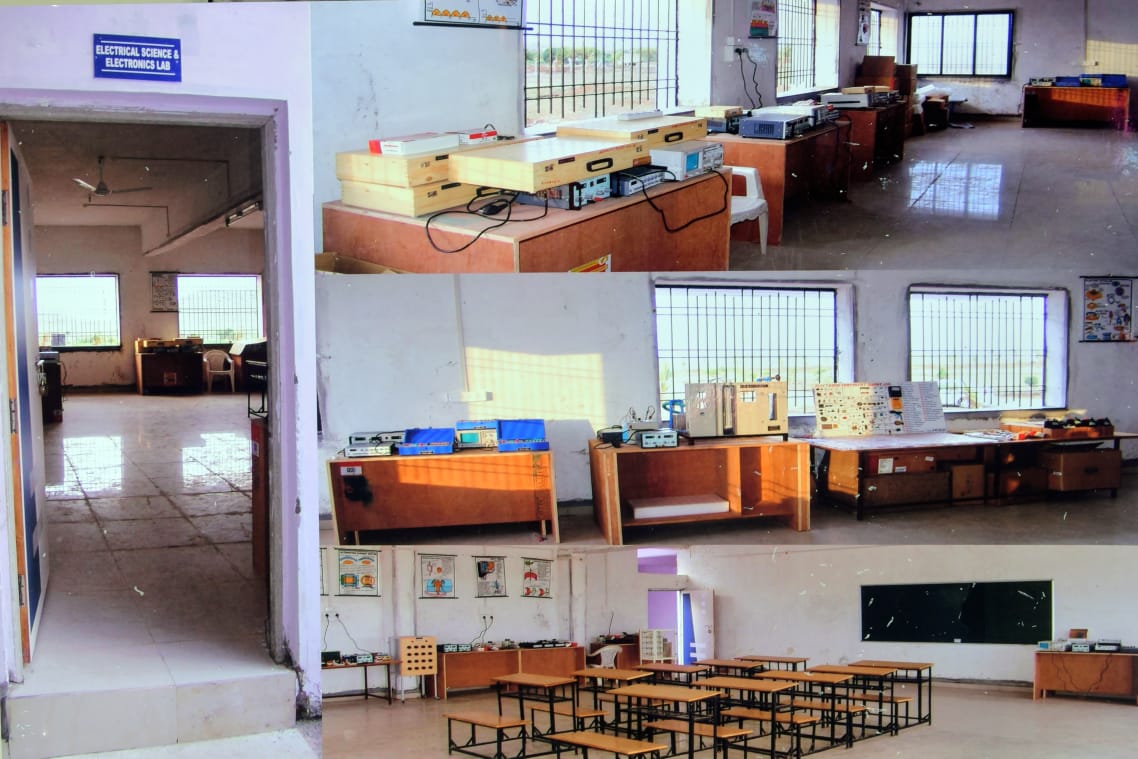
Laboratory Facilities
- Digital Electronics Lab: For understanding and experimenting with digital logic circuits.
- Analog Circuits Lab: For studying and implementing analog circuits and devices.
- Communication Lab: For exploring different communication technologies and systems.
- Microprocessor/Microcontroller Lab: For learning about and programming microprocessors and microcontrollers.
- Digital Signal Processing Lab: For studying and implementing digital signal processing techniques.
- Embedded Systems Lab: For designing and developing embedded systems.
- VLSI Lab: For learning about and designing Very Large Scale Integration circuits.
- Other Specialized Labs: Depending on the department, there may be labs for areas like microwave engineering, optical communication, and antenna design.
- Classrooms:ECE departments often have smart classrooms equipped with technology like LCD projectors, smart boards, and Wi-Fi access.
- Libraries:Departments usually have a library with a collection of textbooks, reference books, and other resources relevant to the field.
- Other Facilities:Some departments may also offer acc ess to specialized research equipment, research spaces, and collaboration facilities.
Faculty Directory
| Sr. No. |
Name |
Designation |
| 1 |
Mr. Rohan P. Bawane |
HOD |
| 2 |
Mr. Pankaj A. Bhojane |
Assistant Professor |
| 3 |
Mr. Mahesh C. Bhad |
Assistant Professor |